Home / Articles / CPG data
The customer data goldmine.
Every unit you sell in retail is a customer you will never know. No name, no email, no second order you can trigger. This is the math on what an owned audience is actually worth to a CPG brand, and how to start building yours this month.
- 5 short questions
- Runs 24/7
- You pick approval or auto mode
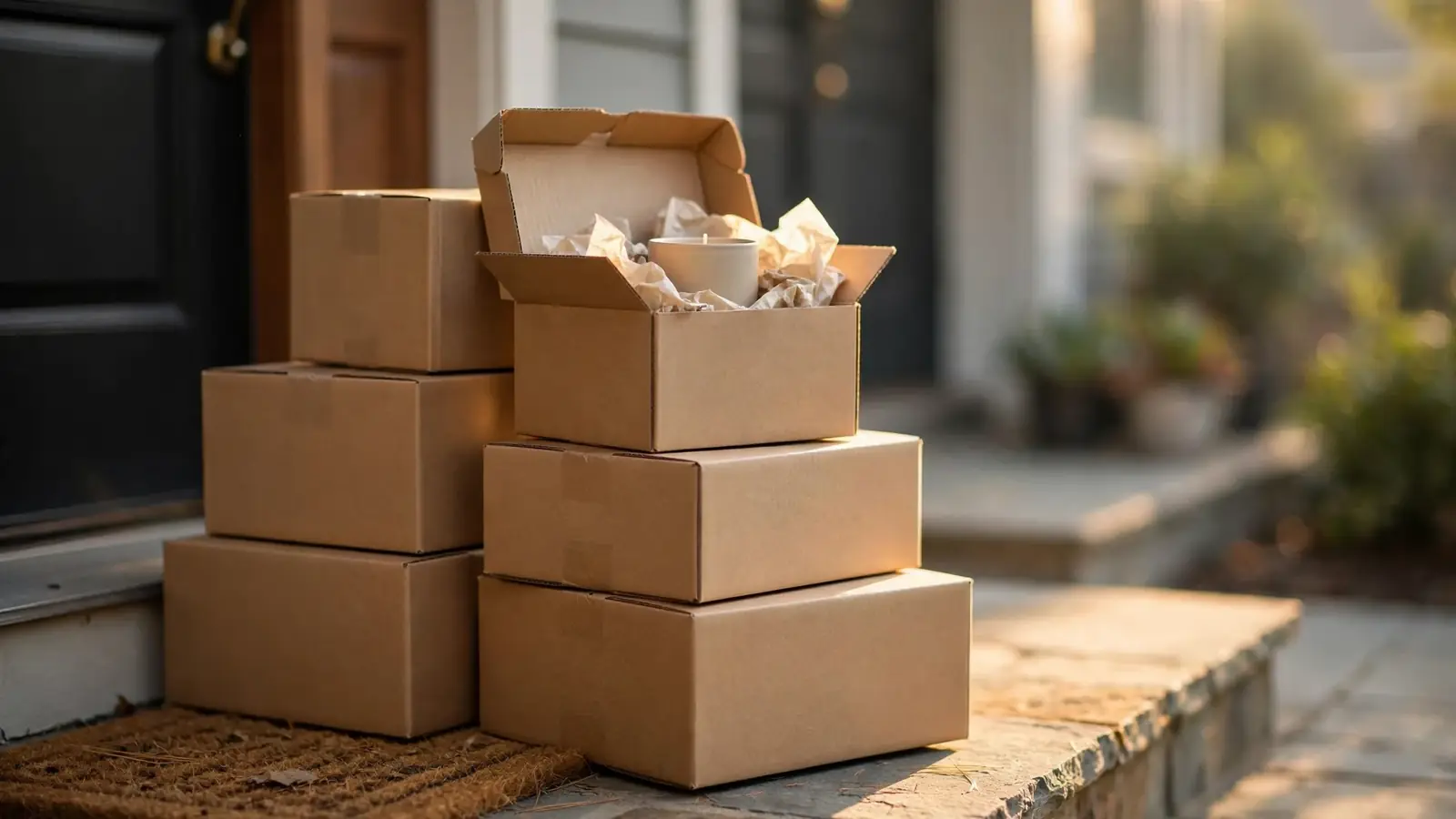
A CPG brand should sell direct because the customer relationship is worth more than the margin. Every retail sale is a customer you will never know: no name, no email, no second order you can trigger. A 10,000-person email list you own can generate six figures a year on repeat, launch products without begging buyers for shelf space, and survive any algorithm change. Retail gives you distribution. DTC gives you the customer.
What you actually get from a retail sale
Let us be precise about the transaction. A customer picks up your product in a store. The retailer keeps roughly half the shelf price. You get a purchase order, a payment in 30 to 90 days, and a chargeback if the buyer changes their mind. What you do not get: the customer's name, their email address, any idea whether they liked it, or any way to reach them again.
Multiply that by a million units and you have built a successful brand with zero customer relationships. You are renting access to someone else's customers, on their terms, at their margin, with their data. The retailer knows exactly who bought your product, when, and what else was in the basket. You know a PO number.
This is not an argument against retail. Retail is distribution at a scale you cannot build yourself. It is an argument against retail being your only channel, because a business with no customer relationships has no compounding asset. Every year starts at zero.
What a 10,000-person email list is actually worth
Let us do the math with conservative numbers, because the math is the whole argument.
Take 10,000 email subscribers. A decent CPG welcome and campaign program gets a 25% open rate and a 2% click-to-purchase rate on campaigns. Send two campaigns a month. That is 10,000 x 2% x 2, or 400 orders a month from email alone. At a $40 average order value, that is $16,000 a month, or $192,000 a year, from an asset that costs almost nothing to maintain.
Now add flows: welcome series, post-purchase, winback, subscription nudges. Flows run automatically and typically add another 30 to 50% on top of campaigns. Now you are looking at $250,000 to $300,000 a year from a list of 10,000 people. And every month the list grows, because every order and every site visitor feeds it.
Compare that to another 200 retail doors. Two hundred doors might move 2 units per door per week at a $3 wholesale margin. That is $1,200 a week, or about $62,000 a year, minus slotting, minus chargebacks, minus the samples and the broker. The list wins by a factor of four, and the list compounds while the doors just sit there.
These are illustrative numbers, not promises. Your category, your price point, your execution all move them. But the shape of the math does not change: owned audience beats rented distribution on margin, on compounding, and on control. This is the core of the CPG growth sequence we run.
First-party data: the asset retailers cannot take
There is a second asset hiding inside DTC, and it is bigger than the revenue. Data.
When you sell direct, you learn who buys, what they buy together, how often they reorder, what makes them subscribe, what makes them leave, and what they say in reviews. That data feeds every decision: which flavor to launch next, which bundle to promote, which ad creative to scale, which retailer pitch to lead with. Founders who have this data negotiate with retail buyers from strength, because they walk in knowing exactly who their customer is and what they want.
Founders who do not have it walk in with a sell sheet and a hope.
The privacy landscape makes this more valuable every year, not less. Third-party cookies are dying, ad targeting gets weaker, and the brands winning are the ones with direct relationships. Your retail competitors are all in the same boat: none of them know their customers either. The first brand in your category to build a real owned audience gets a structural advantage that compounds for years.
Retail vs DTC margins, honestly
Let us not pretend DTC is free money. It is not. Here is the honest comparison.
Retail wholesale margin: you might keep 30 to 40% of shelf price after cost of goods, and then slotting fees, promotions, chargebacks, and broker commissions eat into it. Real net is often 15 to 25%. But someone else handles the customer, the store, and the last mile.
DTC margin: you keep the full retail price minus cost of goods, shipping, packaging, and acquisition. On a $40 order with $12 COGS, $8 shipping and packaging, and $10 acquisition, you keep $10. That is 25%. Roughly the same as retail net, until the second order. The second order costs you $2 to acquire instead of $10, because you already have the email address. The third order costs you almost nothing. Subscriptions cost you nothing to acquire at all.
Retail margin is flat. DTC margin improves with every order, because the relationship amortizes the acquisition cost. That is the whole game. The first order is about breakeven. Everything after is where the business gets built.
The launch list: your unfair advantage
There is one more asset worth naming, because it changes how you think about new products entirely. The launch list.
Right now, launching a new SKU means convincing retail buyers to give you shelf space. Samples, sell sheets, category reviews, waiting months for a reset. You do all of that work before a single customer has voted.
With an owned audience, you launch to your list first. Ten thousand people who already buy from you get early access. A few hundred buy on day one. You walk into the retail buyer meeting with sell-through data instead of projections. The conversation changes from "please take a chance on us" to "our customers already bought 2,000 units in a week, here is the data."
That is not a marginal improvement. It is a different power dynamic. And it only exists if you own the relationship. Our CPG growth page walks through how brands build the list that makes launches like this routine.
How to start collecting customer data this month
You do not need a DTC empire to start. You need three things, and you can have all three live within 30 days.
First, a reason for retail buyers to find you online. A QR code on pack is the simplest bridge ever built: "Scan for recipes" or "Scan for 15% off your first order." Every unit you already sell in retail becomes a potential email subscriber. You are already paying for that package. Make it work twice.
Second, a capture on your site worth trading an email for. Not a generic popup. A recipe collection, a flavor quiz, early access to limited runs. CPG buyers trade emails happily when the trade is fair.
Third, a welcome flow that actually welcomes. Three to five emails: the story, the products, the best sellers, the subscription. Most CPG welcome flows are one email with a discount code. That is leaving 80% of the value on the table.
Do these three and you will have a list growing every week, fed by the retail distribution you already have. Retail becomes your acquisition channel. DTC becomes your profit channel. That is how the two channels are supposed to work together.
The full playbook, including the QR-to-list bridge and the flow sequences, is on our CPG growth page. Your retailers gave you distribution. Now go get the customer.
Start with the Growth Audit.
5 short questions. The SIBT team replies with your next step.
- 5 short questions
- Runs 24/7
- You pick approval or auto mode